Why Iceland.
Iceland offers low public tuition, dramatic natural surroundings, and world-leading research in renewable energy, earth sciences, and sustainability. With a tiny, safe, English-fluent society and the northern lights overhead, it's a once-in-a-lifetime place to study.
Ask the expertLow public tuition
Public universities charge only a registration fee (around €600/year) — you pay for living, not tuition.
Renewables & earth science
The world's geothermal leader — study renewable energy, volcanology, and earth sciences in a living laboratory.
English-fluent society
Among the highest English proficiency anywhere, with growing English-taught master's programmes.
Nature like nowhere else
Glaciers, volcanoes, and the northern lights — a setting that turns fieldwork into adventure.
Safe & tight-knit
One of the world's safest, most equal societies, with small classes and close student communities.
Search the best
in Iceland.
Choose what matters to you. We'll open the university list pre-filtered to exactly that.
When you can
begin.
The main intake — most programmes; non-EU deadlines fall earlier.
A small second intake in some programmes.
What it really
costs.
Tuition is essentially a registration fee; living is high but so are wages. Use this as a planning guide.
* Public universities charge only a registration fee; PhD candidates are typically funded.
Cost of living
Iceland is expensive day-to-day, but public tuition is essentially free and part-time wages are very high. Cook at home, use student housing, and the high cost of living is offset by the near-zero tuition and strong pay.
Funding that
follows merit.
Where you'll
live & study.
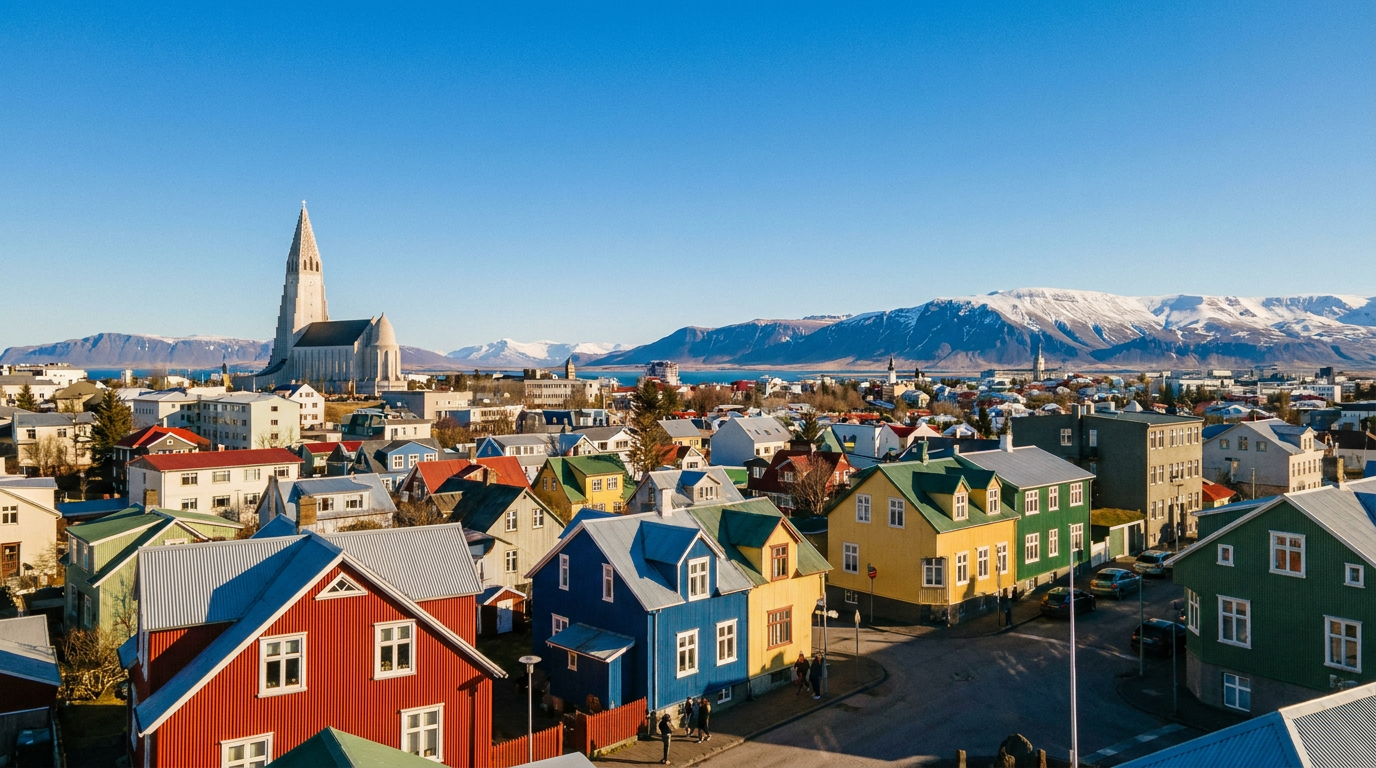
Reykjavik
The University of Iceland and Reykjavik University in a colourful, creative capital — the world's northernmost.
Akureyri
The 'capital of the north' and home to the University of Akureyri — fjords, whales, and a calm student pace.
Borgarnes
Home to Bifröst University in a dramatic rural setting — small, focused, business-and-law oriented.
The visa,
step by step.
EHEC manages your visa end-to-end. We assemble your document checklist, open and verify your blocked account, arrange tax-compliant financial proofs, book your embassy appointment, and run mock interviews until you walk in confident.
Ask the expertAdmission letter
Secure your university place — the basis of the residence permit for study.
Proof of funds
Show around €1,560/month for your stay. We prepare the documentation.
Residence permit
Apply to the Directorate of Immigration; register on arrival.
6-month job search
Graduates may stay 6 months to find skilled work in Iceland.
Public universities charge only a ~€600/year registration fee; private universities cost more. Living is high (€1,200–1,700/month) but wages and part-time pay are correspondingly high.
Iceland is consistently ranked the world's most peaceful country — extraordinarily safe, with universal-style healthcare for registered students.
Yes — non-EU students up to 15 hours/week; the tourism and services sectors offer well-paid part-time roles.
Graduates get 6 months to find work; strong demand in energy, tourism, and tech, though the job market is small.
Not for English-taught programmes — English is near-universal. Icelandic helps for longer-term local employment; we plan support.